Friday, August 26, 2022

Pity & Compassion: Impact on Expectations


Atlas of the Heart Reflections continued...
Near Enemies
In Chapter 7, Brown introduced me to a concept I understood immediately, but had never heard labeled before. Brown shares Kristin Neff's description of the Buddhist concept of "near and far enemies" of emotion: "near enemy is a useful Buddhist concept referring to a state of mind that appears similar to the desirable state... but actually undermines it." The behaviors and attitudes of "far enemies" are easier to recognize because they are polar opposites, while behaviors and attitudes of the emotion's "near enemy" can be more challenging to recognize because they can appear more similar. I was particularly interested in Brown's discussion of compassion and pity. 
Compassion/Pity
The far enemy of compassion is cruelty. In the classroom, this might translate to a teacher using extreme sarcasm with students, being overly critical of the student without offering meaningful feedback, or even having a "no excuses" attitude with all students, refusing to acknowledge that not all students have the same conditions. These are pretty easy to see and if a teacher can't recognize this in themselves, an admin, colleague, student or coach would likely be able to identify these actions.

The idea that the near enemy of compassion is pity, though, really struck me. Unlike cruelty, it would be more subtle to recognize when a teacher  believes they have great compassion for their students, but actually behaves in a way that pities them. 

Brown quotes Jack Kornfield who writes, "pity says, 'oh that poor person. I feel sorry for people like that.' "  This separates us from our students and sets us up to be the person who can swoop in and save them because we see ourselves as better than. I immediately began thinking about what this does for our academic expectations. When we feel bad for, or pity, our students' life circumstances, learning struggles, or other aspects it's easier to excuse them for tasks and experience that feel "too challenging."  Although the near/far enemy concept is a new one for me, I can recall instances where what felt like compassionate behavior was really more pity. I was also reminded of Zaretta Hammond's work on "dependent learners" and how as teachers we often perpetuate this dependence when we don't actively cultivate independence and academic mindsets. Pity makes it difficult to push students to independence because this emotion views the students as incapable of rising to the expectations we have for them. 

When we pity students we say, "How sad. I couldn't possibly expect too much from you so I will lower my standards." With compassion we say, "I know this is difficult for you, but I won't disrespect you by lowering my standards. We will work toward this together." Brown doesn't go into this too much  in the chapter, but she says one element of pity is "a passive, self-focused reaction." I imagine that when we pity students it is much more implicit and compassion has more explicit actions. For example, if my pity for a student drives me to give them credit for "nearly correct" work, I probably won't say anything directly to the student, I'll just give them the credit. The student may believe they were proficient when maybe they weren't or the student may KNOW that the answers weren't actually satisfactory and now they realize I don't have very high expectations for them. Compassion, though, seems to require more explicit behavior--a conversation with the student about exactly where they were correct and where they started to go wrong, an acknowledgement of their effort and feedback on how to improve. This explicit conversation sends a clear message to this student that I will not let them fall short of the standard. The chart to the left shows a couple specific classroom scenarios where we could respond with pity or with compassion.


As I reflected on my own pity/compassion responses with students, I began thinking about how this translates to my interactions with teachers in the coaching role. Honestly, in some ways responding with compassion as a coach feels more challenging. Teaching is a vulnerable activity and having a coach witness your teaching can be intimidating. Directive Coaching is a style that feels uncomfortable for me when I am uncertain if the teacher wants this direction. Building out the scenarios in the table to the right helped me realize that compassionate responses have more to do with 
honesty, conversation, and follow through than they do with directing a teacher on exactly what to do. This is an important reminder for me because in the past I have felt guilty about responding in a "passive self-focused" ways with teachers because I was too nervous to offend them or damage a relationship. In the same way that we want teachers to hold high expectations for all students, we must do the same for all our teachers. Anything less than this says, we don't believe our teachers are capable of growing, which is certainly not a message I intend to send. 


Reading about pity/compassion and reflecting on how these emotions negatively and positively impact our expectations has been timely. As a district, we are entering year 2 of trying to increase equitable literacy experiences for our students across classrooms and schools. A foundational idea of this work is that we must establish and maintain  high expectations by providing students academically rigorous opportunities. We can't pity our students by jumping in too quickly and saving them from a challenging text or task and take away their opportunities to think, struggle, and succeed on their own. Instead, we can compassionately acknowledge the struggle and provide students timely supports they need to meet the expectation. This mindset feels equally  important to apply to the coach/teacher relationship when thinking about saving versus supporting teachers. Our responses must show we respect them enough to hold high expectations. 


Monday, July 18, 2022

Atlas of the Heart in the classroom

I recently read Brene Brown's newest book, Atlas of the Heart: Mapping Meaningful Connection and the Language of the Human Experience. Brown's work is always a powerful tool for reflection for me but I generally think about it more for my own friendships and family relationships. While I had plenty of those moments while reading Atlas, more so I kept coming back to the classroom and implications of this work for educators and schools. Rather than one long post with all my thoughts, I’m going to generate several shorter posts covering the most salient connections to teachers, students, and school.

Restaurants and classrooms

In the first chapter of Atlas, Brown talks about the maybe not so coincidental fact that many of the people who work on her team have all had extensive experience working in restaurants. She characterizes servers as people with "hustle" who understand the importance of teamwork and collaboration. When she described someone seeing a sugar packet on the ground and walking over it because it's not their job, his, she says this is a sign that they are not a good fit for her team. I chuckled at this scenario, thinking about how often I pick up stray papers, water bottles and other scraps as  I walk down the hallways in school. Given that I worked in restaurants, I'm probably a bit biased to agree with Brown's view of servers as hardworking and committed to doing whatever is need to make the whole operation run smoothly.

Brown draws on two restaurant expressions to describe the difference between the emotions of stress and overwhelm. Stress, Brown says, is like when you are "in the weeds" as a server. Being in the weeds is when you are falling behind in your tasks and you feel temporarily like you can’t catch up. Overwhelm, or being “blown” is when you have such high levels of stress that you almost can’t perform at all. You are so overwhelmed that you are almost frozen and hardly know where to even begin accomplishing your tasks,

This comparison caused me to reflect on how teachers ask for help and how helpful I can be as a coach.  In the restaurant atmosphere, if someone says they're in the weeds, as a fellow server I'd ask what they need and step in and start pouring drinks, bringing food or whatever they needed to a table for them. Basically I'd start doing a few of the very simple tasks, none of which are hard or require tons of thinking but add up to what feels like an insurmountable job. In the classroom this might be something as simple as making a few extra copies, passing out some papers, helping a student or couple students get caught up on what they're missing or helping them find the work in the computer. 

If someone was blown, in a restaurant another server likely couldn't take over because they  have their own tables which is why the kitchen manager generally steps in that situation. Similarly, if a teacher has reached a day of being blown, or even a single class period, a coach could step in. They could go to the bathroom or take a walk and it's just understood that I will remain in their classroom and take over. Because this is a predictable situation, I probably even have a few back pocket activities at the ready for each grade that I can have kids do if I know what the activities they had been planning to do. As Brown says in this chapter, if someone has reached the point of being blown, they are not in the head space to step in and explain all the details of their lesson plan. Just as a the kitchen manager sends the blown server away for a break instead of asking them all the things that need to be done, a teacher might need this same relief from the environment altogether. They need a brief period of "non doing,” which Brown described as time when they can calm down and return to a state where they are not totally cognitively overloaded.

When I was in the classroom I created quick ways for my student groups to let me know they needed my help or did they did not. Modeled after the ping pong paddles I had seen in the Bubba Gump restaurant, each group had a paddle with a green side that read “Go Ms. Gray, go” (we’re good, no help needed) and a red side which read, “Stop, Ms Gray, stop,” (we’d like your help). The fact that my 6th graders actually used this silly method is one of the messy reasons I adore 6th graders!  The paddles came to mind in this section because I realized they were an explicit way for my students to identify when they needed me to intervene and when they wanted to be independent.

Reflecting on my own coaching, I am always most hesitant to step in start helping  in newer teachers’ classrooms, mostly because I never want to appear as if I’m taking over because they are incapable. I have the easiest time recognizing if a teacher is in the weeds or blown when I know them really well and we’ve already developed a relationship. Although I offer support to all the teachers I work with, we’ve definitely never established a formal way to ask for support. Paddles would certainly be over the top, but I have been wondering if there is some sort of signal to establish if the teacher wants me to step in during class. I even thought about giving each teacher a small laminated picture of some weeds on one side and heavy wind on the other side for them to discretely display if I’m in the room and then I can just jump in. Probably that’s overthinking it and it’s as simple as having individual conversations with newer teachers at the start of the year to directly ask them how comfortable they feel with me jumping in mid-class. Either way, Brown’s restaurant comparison of stress and overwhelm helped me think about the levels of support teachers need in different situations.  

Every teacher has a class/day where they find themselves stressed and in the weeds and asking for and accepting small bursts of help should be a reliable source of support. Being blown, or totally overwhelmed, though, feels like it could have larger consequences when teachers aren’t provided the “non-doing” time away to recollect themselves. Maybe teachers use a sick day to give themselves the time away they need or perhaps they show up late for a common plan session and aren’t in the right frame of mind to plan productively. Teaching is mentally and emotionally taxing work, so a coach’s support couldn’t eliminate these scenarios altogether, but this excerpt from Atlas has had me thinking more about what I can do to support teachers more actively to make sure each “shift” runs as smoothly as possible.

Friday, July 8, 2022

Missing Instructional Mentorship

Over the last several years,  I have noticed both a growing impatience with teachers as well as an oversimplification of how to do incredibly complex things, such as build relationships or engage and empower learners. Often times teachers receive feedback in the form of directives to differentiate, establish better routines, or to include student voice and choice, with little modeling or support for teachers. It can be easy to fall into the nostalgia black hole of how much better things used to be, so while trying to avoid that path, I've been thinking about what changes might account for impatience and oversimplification. As a result, I've been reflecting a lot lately about my most influential mentors when I was a young teacher as well as what role mentorship plays in my work as a coach.  Ultimately, I believe some of the shifts I've noticed for teachers is because some of the forms of mentorship that shaped me as an educator are missing for teachers right now.  

When I was first hired as a middle school ELA teacher I had to meet with the Superintendent to sign my contract to officially accept my position.  In addition to the not so minor detail that the superintendent sat in a chair beside me rather than across from me at his desk, another moment from this meeting has been cemented in my memory. I'm sure he had dozens of other meetings and responsibilities that day, but  he patiently talked with me about teaching. He talked to me about getting students’ attention and how that can often be done more effectively by quieting down myself rather than raising my voice in desperation and gave me other sound advice for a new teacher that were drawn from lessons of his own experiences as a new teacher. At the time I definitely listened to and accepted his advice, but it wasn't until years later that I really appreciated this experience. The fact that he took so much of his time talking teaching with a 22 year old rookie who might not have made it through the year makes me grateful for this opportunity.


My first principal's mentorship began even before I officially started working under her. During my interview, she acknowledge that I didn't have any teaching experience so it wouldn't be fruitful to ask many of the questions she'd typically ask. Instead, so she drew on something I had a lot of experience in--working in restaurants. She used scenarios of how I  handled irate customers, when to ask for a manager's help, how I approached working with other servers, and more. Rather than emphasizing my obvious deficiencies, she gave me an opportunity to speak knowledgeably about what I did know. This was the only interview I exited feeling like maybe I actually could do this work. With some perspective, I can see that what she did for me in that interview is exactly what we want to do as teachers with our students; meet students where they are and build on the extensive real world knowledge they bring to the classroom.


      Once I began working for her, my principal's mentorship continued. She freed me from duties so that I could observe other ELA teachers who served as models for classroom management and strong instruction. Our staff meetings often had professional readings about instruction, included  text-based discussion protocols, and tangible techniques to implement in our classrooms before the next staff meeting. At times we examined student work, shared lessons and best practices. Professional Learning Groups didn't appear in our district officially until almost ten years later, but she certainly ensured we were a group of professionals learning together. Like all my best teachers from my K-12 education, I still have and reference some of the readings and materials she provided us. On a more individual basis, I greatly appreciated the conversations I had with her after she had been in my classroom.  She seemed genuinely curious when she asked questions about the lessons she had observed and also named very specific actions during the lesson that were positive. For example, rephrasing a question in a different way to elicit more student responses. She offered small but practical teaching advice. Specially, I remember she commented on increasing my wait time after posing a question. This was something, she said, that she always struggled with as well so she got into the habit of slowly tapping each finger on her leg or arm one at a time to remind herself of that time. Even when I'm facilitating a PLG for adults, I still use this strategy to remind myself to slow down and allow people time to process and speak.

A    

       A little later into my career I had an assistant principal who served as an incredibly effective instructional leader mentor. He visited my classroom often and stopped by my room to informally talk to me about instructional decisions I had made. Eventually he introduced me to the Universal Design for Learning framework by connecting specific elements he saw in my classroom to the guidelines of UDL. Our conversations were fueled by curiosity, respect, and reciprocal learning.  Aside from having a profound effect on my classroom, his mentorship as an instructional leader also solidified for me that teacher professional development must be a priority in a school and that it works best when classroom teachers and administrators collaborate to actualize a plan.

I feel fortunate to have had mentors who exhibited both high expectations and patience with me as a teacher. They weren't simply telling me I needed to build relationships with or engage my students. They were doing those things with and for me. It is this  human element of teaching and the network of mentorship  that feels like it is missing for teachers right now.  Being present in my classroom was an essential element of the mentor relationships I experienced and for some (likely many) reasons, this seems as if that's not as common right now. It has begun to feel as if it's not even possible right now, as if there are so many other burdens placed on administrators that being in classrooms feels like a luxury more than a priority. 

Recently, I've been wondering whether the coach roles are intended predominately to provide the type of mentorship I received early on in my career. It has certainly never been explicitly communicated that way, but as we increase the number of coaching positions it seems that coaches are more likely to be in classrooms frequently. It follows, then, that coaches would be more likely to have conversations about instructional moves and decisions with teachers.  I'm unsure, though, if this relationship has the same school-wide impact as strong relationships  teachers/admin formed on discussions about the complexities of day-to-day teaching. 


Wednesday, October 20, 2021

Retrieval Practice in Practice


NEA's September issue contained an article titled, "The Science of Learning," which shared some practical instructional tips classroom teachers could learn from psychology teachers based on what we know about how students' brains work. The article as a whole offers several interesting ideas and it's a quick read (full article linked here), but one idea in particular stood out to me--retrieval practice.

For the last few years, I have been thinking about retrieval practice and its potential benefits in learning.  Basically, the act of struggling in short, frequent bursts (practicing) to recall (retrieving) information that you've previously learned actually helps that information become more solidified in your brain.  UDL being the lens through which I view just about everything, when I first started learning about retrieval practice I created the image below to help myself visualize what is happening in learners' brains when they're putting in and pulling out information they are trying to learn. 
                                                   
My image is likely an oversimplification of the process, but at the very least, it helps remember that when we're asking students to express and act on what they've learned, that info lives in the back of their brain and they have to "reach in" and "pull" it out. Like a neglected forest path, thick with overgrowth, the unused pathways in our brains become overgrown and it takes longer to travel through to get to the information. Retrieval practice is the intentional act of "traveling" that path in our brains to wear down the overgrowth and helps us access the information quicker and with greater durability. Think of it as actively working toward "Use it" to avoid the "lose it" scenario.

There are a few key points about retrieval practice  I feel we should consider before implementing with our students.
  • FORMATIVE: Retrieval Practice is PRACTICE for learning and not an Assessment of learning. Retrieval practice activities should be low stakes and ungraded. Attaching a grade, quiz, or assessment to retrieval activities removes the practice element and adds a possibly punitive element to what should be a low-risk practice. Frequent practice helps students feel more comfortable and confident with their own ability to learn, which is what helps students feel successful and see themselves as capable.
  • STRUGGLE: Struggle is an intentional and essential component of retrieval practice--working hard to recall information has been shown to increase the likelihood that you will remember it in the future. With struggle, though, it's important to consider how long to allot for retrieval practice activities so that students aren't struggling for 20+ minutes with what feels like no end in sight. Alternatively, allotting way too little time could cause students to shut down and send the message that the activity is about speed and not recalling information.
  • NO REFERENCE MATERIAL: While we want our students to be resourceful learners who access references and resources when needed,  the purpose of retrieval practice is to strengthen the pathways to information in our own brain so we don't have to rely on those references all the time. Since there is no assessment tied to this, retrieval practice activities should be designed so students don't feel the pressure to pull out materials and copy answers.

 Retrieval Practice in the Classroom

1. Retrieval Grid-( idea from NEA article) Similar to a bingo cards, there are a variety of questions for students to answer, with lower point items being materials they've just learned and highest point value being material from longer ago (reinforcing the practicing of pulling out old info to build stronger neural pathways to that info). With practice, over time students should notice they can pull more info and faster.  I made sample one for ELA that could be created for any content area. The point values and timeline for when you pull information from can vary as well.  
Implementation Tips: Give students a short amount of time to complete as many questions on the grid as they can before revealing answers. Students count up the number of correct answers and add points. You could use the grid with similar content ("testing" same info) later in the week and have students count points on a second attempt. These points are purely for the students' own self-reflection about how much of the content they've mastered. I could also see a group work element to this after some independent time with the grid. 

Sample grid HERE

2. Flashcards (as group activity): While flashcards are not revolutionary, especially for people who have learned how to learn/study, the intentional practice of recalling information through flashcards is a useful tool. Designing lessons so that all students get the support and push they need is challenging and especially in rooms with a single teacher, it can be difficult to find small group time with students who need more support. Retrieval Practice tells us that all learners can benefit from actively recalling previously learned content and flashcard stations could be a way to meet both teacher and student goals. (Note-Quizlet and other online flashcard-esque tools are great as well, but there is also benefit to slowing down this process and ensuring that students are truly retrieving information before moving onto the next card). 

Implementation Tips: Create a couple different decks of flashcards with a range of content learned at different periods of time--there could even be a couple terms/concepts from the previous year's content. For students who have shown competency in the current content goals, maybe they have a deck with more cards of older information to increase the challenge. If your intention is to build in face time with students who need an extension, maybe there is a deck for students who haven't yet mastered the material with a greater number of recently learned information to build confidence and success. In either case, students will need explicit directions around "quizzing" each other using cards. 
For example: display only one side of the flashcard to the person being quizzed. Try not to rush or settle for partial answers--let the person being quizzed talk out the full answer and see how close they get. Leave all cards in the deck--even the ones the ones you get correct easily--repeated exposure to the information helps cement the learning. Shuffle the deck so the cards aren't asked in the same order every time.

Both of the examples above require a bit of planning on the teachers part and might also take a little more time than other possible retrieval practice opportunities.  A more "on the stop"  retrieval practice example could be a Do Now or Exit Ticket activity. Give students a topic (recent or near distant) and ask them to write down everything they remember about the topic. This could lead to pair n' share comparisons, small group talk or even a whole class chalkboard splash.  While working with  some 6th graders on Greek & Latin roots, I incorporated quick retrieval practices by asking students to list as many of the roots we had studied and their definitions as they could recall.  They checked their accuracy and total count against the answers I displayed, and we did that a couple times throughout the week--each time taking under 5 minutes total.  Activities like these could be done relatively quickly and give students chances to pull that info to front of mind. 

In their book make it stick,  the authors make the point that teachers may be the ones initially directing and introducing the retrieval practice, but that at some point that can and should shift to students doing this for themselves. When we offer these structured opportunities for our students with our content, we also provide them with explicit study skills that help them become more intentional learners. 


Resources for reading more retrieval practice:  

  • Retrieval Practice website: https://www.retrievalpractice.org/why-it-works
  • make it stick: The Science of Successful Learning (Brown, Roediger III, McDaniel)
  • "The Science of Learning" https://www.nea.org/advocating-for-change/new-from-nea/science-learning


Monday, October 19, 2020

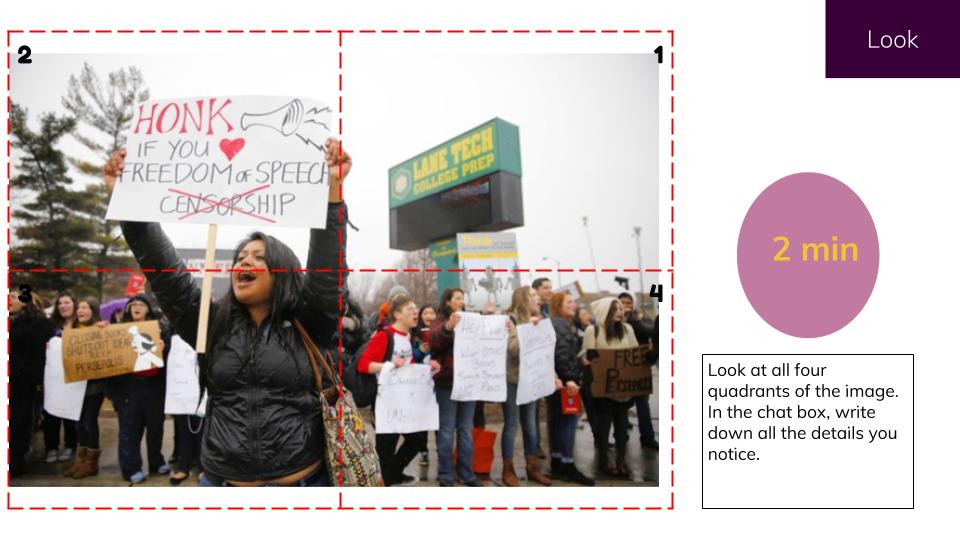
Look Micro-routine Recap

In the ELA Department's most recent PLG we examined a couple Micro-routines for Literacy put out by New Vision for Public Schools.  One appealing feature of these routines, which have been adapted specifically for remote instruction, is that they are intended to take a short amount of time and have very few steps. As I've been sharing micro-routines with teachers in and out of the ELA department, I sense a healthy amount of skepticism from teachers about the actual amount of time these routines would take. While it is within our control and discretion to adjust the timing to suit our students, I also see the value in keeping to these time frames. 

For one, we know that everything (everything!) seems to take longer in the remote classroom. I wonder if sticking to the brief time limits of these micro-routines could actually be a way to increase efficiency. If we incorporate the routine frequently enough,  students' ability to respond within the time frames may increase. 

Another benefit to sticking closely to the allotted time is that even if things feel like they're going poorly, the routine only lasts for 6-ish minutes. When we think about the UDL concept of varying demands and resources, one really interesting way to create a reasonable challenge for students is to play with time. If they run out of details to share or feel confused about the image you're using in this routine, they know each step of the routine will only last for two minutes and they won't be struggling for an undetermined length of time.

WHY  include the Look routine? 

  • To provide multiple representations of ideas and concepts students are studying
    • when using images/art specifically, to provide an alternative to print text.
  • To provide opportunities for students to observe closely and identify specific details
  • To pique students' curiosity about something they will read more about or extended their thinking about a topic they've already read about.
  • To increase students' comfort and confidence in speaking out loud and sharing with the class
    • Naming specific details students have observed seems like a low-risk, high reward opportunity for student participation

HOW I might implement Look:
(Ideas that follow assume that the routine has been introduced and practiced with familiar content and students are familiar with the routine).

  • Choose an interesting image that connects in some way to a thematic idea of a text students will be reading in ELA class.
  • Display the image for students and allow them 2 minutes to look closely at the image and use the CHAT  to record as many details as they notice in the quadrants. Give students 2 minutes to share out loud the details they find to the most interesting in the quadrants (as outlined in the slides example we looked at). 
  • Repeat the Look process with a second related image. There are a few possible approaches I can imagine for this.
    • If your students are efficient with breakout rooms this could be a way for students to engage in the Look routine in a much smaller group.  When students return to the whole group (after 4 min), each group could share out the most interesting details they discussed.
    • We discussed the possibility of assigning students different quadrants to focus on and share out with the class. This could be done by displaying a list of student names in a grid on the slide (pictured below). Assigning students to specific quadrants could help limit the amount of students entering in the chat at once in the first part of the routine.
  • Pair these images with a short excerpt from the anchor text students are reading. After students have examined and discussed ideas in one or two images, provide them with a short reading excerpt that examines some of the ideas reflected in the images. Students could complete the reading semi-synchronously annotating for a specific reading focus. For example, after examining the two images about "courage" students could read an excerpt from Number the Stars. A possible reading focus could be to identify evidence in the excerpt that reveals a character's courage. (RL 6.1 citing evidence and RL 3 character's reaction). Students could complete a reading in pairs, small groups, or independently depending on how the teacher wanted to structure this.
  • Return whole group and have students share examples of the textual evidence they cited. Examples could be shared by cold-calling on several students, asking students to agree, disagree, or add-on to a peer's response. Students could type evidence in the chat, but if they've also completed a Google Doc with annotations, sharing in the chat may not be worth the time.
  • Possible Exit Tickets: Use a Google Form and ask students to share an interesting observation they heard a classmate share today. Ask students to explain which of the two images they think best pairs with the excerpt they read. Students will have to pull evidence from both texts in order to explain thoroughly (RL 6.1).

Below are some examples that I compiled should anyone want to incorporate this routine into an upcoming lesson. Each of the images align with a thematic idea explored in each of the Trimester 1 Anchor Texts for grades 6-8. 

Grade 6 Examples for the thematic idea of courage. Number the Stars


Grade 7 Examples for the thematic idea of empathy. Walk Two Moons

Grade 8 Examples for the thematic idea of censorship. Fahrenheit 451


One of the groups also discussed the idea of concealing some of the quadrants in the beginning of the routine and to slowly reveal each quadrant so the students could see the image being pieced together. This was an easy adjustment to the slide by simply adding filled-in shapes and covering up the quadrants 2-4. The video below shows an example of the "slow reveal" version of Look. 

For anyone interested in using the images they slides template is linked here. Please share additional ideas or experiences with the Look Micro-routine!


Tuesday, October 13, 2020

padlet for Recording Student Reading

One of the strangest parts of teaching remotely is not hearing the noise of student talk in classrooms, or sometimes students' voices at all. When meeting with the 6th grade ELA teachers from across the district last week, several of them brought up the concern of not being able to hear students read out loud very often. This was something I'd actually been thinking about over the summer when I was considering the many different ways in which we could use padlet for remote instruction.

padlet is a versatile tool because it allows students to express their understanding and learning in multiple ways. Students can type, draw, film or record themselves, and more.  Many students prefer to keep their cameras off, for a variety of legitimate reasons, but the film recording is one option for students who don't mind showing their faces but need to find the right time and place to have a distraction-free environment. The audio recording feature has good appeal as a way to keep in touch with what students are reading and to hear how they are reading.

I envisioned  just a few possible ways this could be organized, but of course there are many more possibilities. 

1. Teacher-created: Create a padlet using the "Grid" or "Wall" format for the page. Ask students to create a post in which they include their name, the title of the book they're reading, and a page number. Student can then click the three dots icon to produce the dropdown and select the purple "Voice" icon.  This allows students to record themselves for up to 15 minutes. Although they shouldn't need that much time it's nice to know a slower reader won't be cut off before finishing their page. I created an example padlet like this and set it so that I could both add a comment and give a "grade" is this was something I were scoring or tracking. Even if I were not going to give a score to these recordings, I'd still keep the comment feature open so I could provide feedback. Here is a link to the example padlet with an example student post. One drawback to having all students post to this same padlet is that they would all be able to hear each other's recordings. While it might be nice for students to see the books their peers are reading, I can also see why this might not be desirable so I started brainstorming other ways I might organize this. 

2. Teacher-created & Organized: Create a padlet using the "Shelf" format for the page, which will allow you to have student recordings organized in whatever system makes sense for you. In the example, I created columns by month because I thought it would be a nice way for students to collect their progress across the year. The brief video below shows how to set up this padlet, with comments, grading and the Require Approval Setting. By requiring post approval, none of the students' post will be visible on the public padlet until you listen and give your approval. This is a way to to limit students listening to each other's posts if you are concerned about that. 

After all students have submitted a post, you could also go in and create a password for the padlet so that students cannot go back and look at the padlet until or if you give them the password.

3. Student-created: If you wanted students to create their own padlets to recording their reading there are a couple of easy steps. First, students need to create their own padlet accounts. This is free and easy to do by visiting this link. Second, you would could show students how to create their own padlet OR you can set up a template for how you want it organized and ask them to create a REMAKE of the template. By copying the format and the posts, students will have a ready-made padlet for them to begin recording their reading. The video below shows how to create Remake of an existing padlet. Note, students must have their own padlet account in order to create a Remake.


Reading out loud to our students whether during live lessons or in pre-recorded videos during independent work is a great way to continue exposing students to model fluent readers. It's also important for us to hear how students are progressing in their reading especially since they may not have as many opportunities to practice reading while at home. padlet is just one tool that we can use to record and collect our student reading, as well as provide feedback. I'd love to hear how teachers are using this and other tools to stay connected to students' reading!


Monday, October 12, 2020

Exploring Close Reading Routines for Remote Learning

Planning for a once a week 60 minute PLG that is sandwiched in between four back-to-back teaching periods and a staff meeting on Friday afternoon sure does have my brain working overtime! My son has many times explained the sweet spot of the bat to me, and I think that's what I'm seeking with PLG. In order for PLG to feel like a "homerun" for all, it's important to find that balance of sharing resources and ideas without risking cognitive overload and shut down. As with our students, the truly difficult part of this is that everyone's threshold for shutting down varies! Overall, though, the majority of the group appreciated time to share successes and struggles with each other and also to explore a resource of their choice. 

Despite having to adjust our practice and potentially let go of many of the activities and materials we would use in a typical school year, close reading is a practice that will always be an important one for students. It was really nice to see the energy and enthusiasm of the discussion around close reading and the possible ways these strategies could be used with our students. 


The Annotation Routine for Remote Learning offered a framework that could be used repeatedly with different texts, for different purposes and in a variety of ways. In the example video, the teacher had a small number of students working in the same document and gave them a specific focus for their reading and annotation.  I appreciated the way she had her Google Doc set up with the Annotation Focus grid set in the Header and in the Footer she had sentence starters for how students might respond to their classmate's comments. 

I had shared this annotation routine with an 8th grade ELA teacher earlier in the week and she used it with a small excerpt of Fahrenheit 451. Logistically, there were a couple of things to consider when setting this up.
  1. To avoid the overwhelming and possibly distracting scenarios of 25+ students all highlighting and commenting in the same document,  she used breakout rooms and had those smaller groups use a single shared document for annotation. 
  2.  She had to group the students as well as create and post links to each of the breakout rooms in the slides.
  3.  For the close reading document itself, she had to create multiple copies of the same document and only assign it to specific students (according to how she had grouped them). This was one of those "little details" that could have been the difference between confusion and wasting time or having the class run smoothly! 
I was fortunate enough to join some of the breakout rooms and listen in as the students discussed the small excerpt of text. Students used the Annotation Guide at the top of the document to direct their conversation, especially when they were trying to decide what to highlight and comment about. The number of students in each group (4-5 max) was a really nice amount of students to allow for multiple voices as well as for a controlled number of readers highlighting and commenting in the document. 
                                                
 Annotation Routine, student example
Routine from New Visions for Public Schools

While certain groups needed more support than others, each group I visited was grappling with the text to some degree. Some students felt more comfortable highlighting the text only so I would either type in Chat or ask out loud if they highlighted that because the language grabbed their attention or because it revealed something about Montag (the annotation focus questions). Each time, the student was able to provide a reason for their highlighting. As a support, I inserted a comment, transcribed their explanation and attributed their name. I then encouraged them to go back and comment on other areas they had highlighted. 

This worked really well with the small group sizes created by the teacher. Also, she was asking them to annotate with a character and language focus that they had previously done together with a different excerpt from the novel. Apply a familiar annotation focus to a new piece of text allowed the students to draw on prior experiences with close reading.  I could also see using this format for a formative assessment with a new piece of text and produce a short written response. Alternatively, I could imagine assigning partners and having students first independently annotate their own document. After independent annotation, students could swap documents and respond to each other's annotations using comments. 

Three Reads Protocol from New Visions for Public Schools was another close reading approach that some of us explored in PLG. This was protocol was not specifically adapted for remote learning,  but I could easily see using this remotely in both a live lesson or as independent work. 

The purpose of the protocol is basically to have students focus in on a much smaller excerpt of a larger text and to read it at least three times, each for a different purpose. The explanation and examples of the Three Reads Protocol provide several different ways you might tweak the purposes for which students read. While you might have students read to Comprehend, Analyze, and Connect, you could change these purposes and have students read to focus on Vocabulary, the Main Idea, and Comprehension. The reading focuses you have for students can change depending on the goal, the complexity of the text, and the amount of scaffolding needed. 

I used the same excerpt from Fahrenheit 451 in the example below to show how I might use this protocol. This could be done in small groups with students working from the same document, highlighting and adding text to the blank boxes. The Three Reads Protocol could also be done independently, with students bring their notes to small group or whole group conversations. 

Example of Three Reads Protocol using Fahrenheit

As with any new routine, I'd model the Three Reads Protocol whole group so students could hear the thought process and see how to annotate.  The first time I asked students to use this protocol, independently or in small groups, I would probably choose a piece of text we'd already read once and ask them to read for purposes we'd previously done together in class. 

I look forward to seeing how these, and other close reading routines, get  incorporated into remote ELA classrooms!